| Temperature | 78 °C |
| Working pressure | 20 bar |
| Power | 3 kW |
| Total power | 3 kW |
| Capacity per pump/minute | 65 liter |
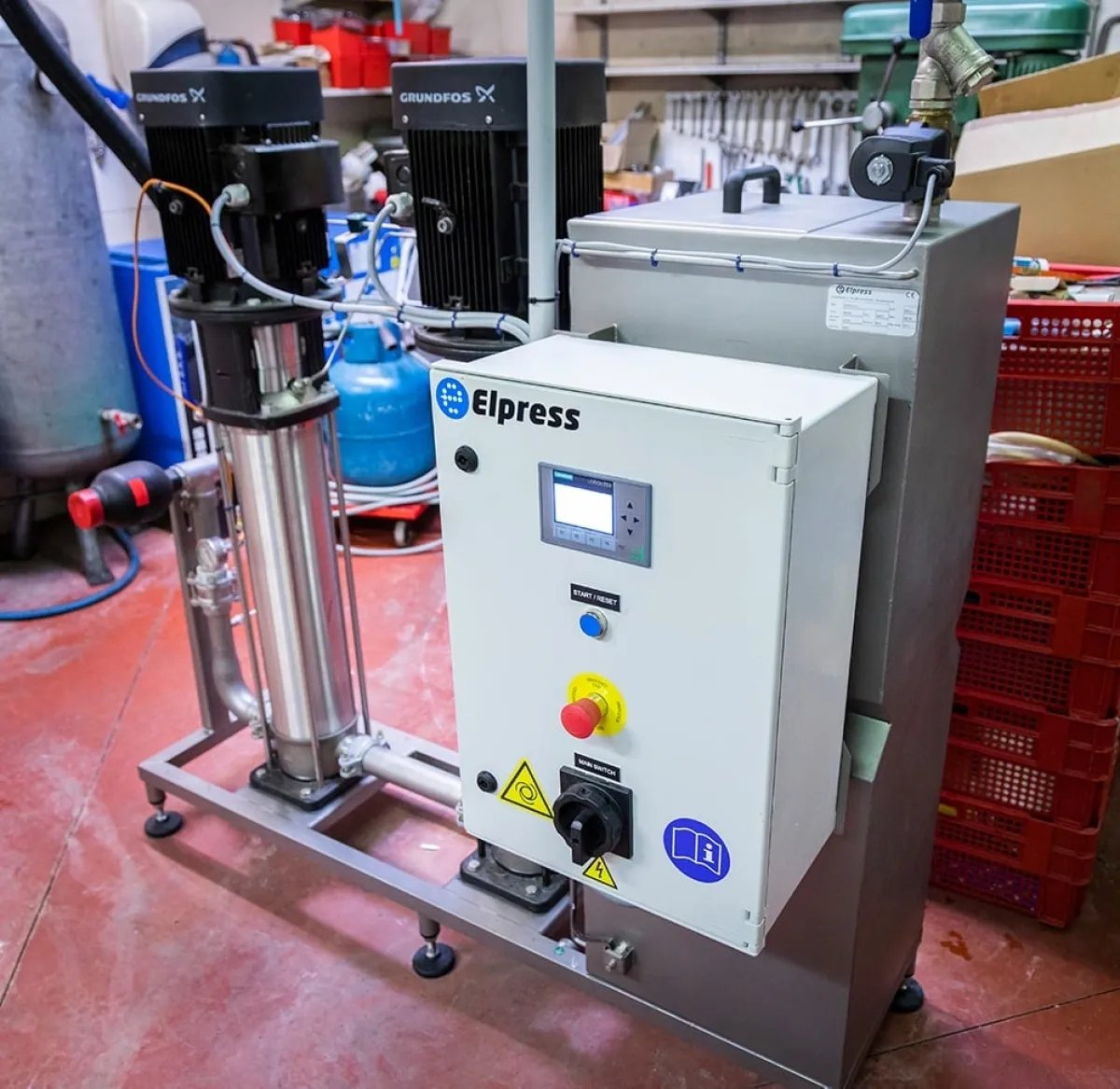
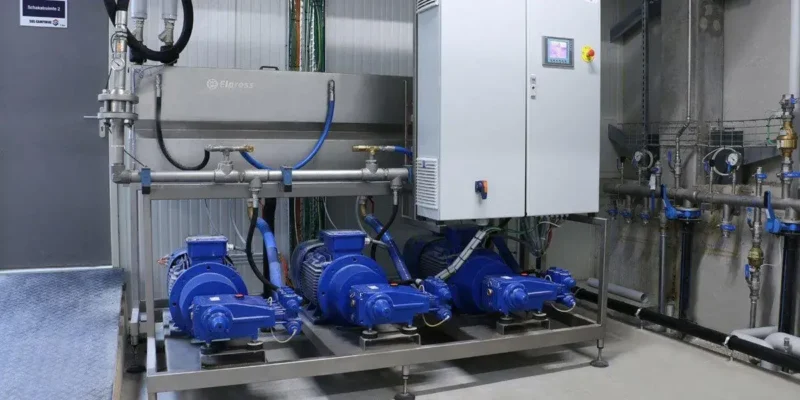
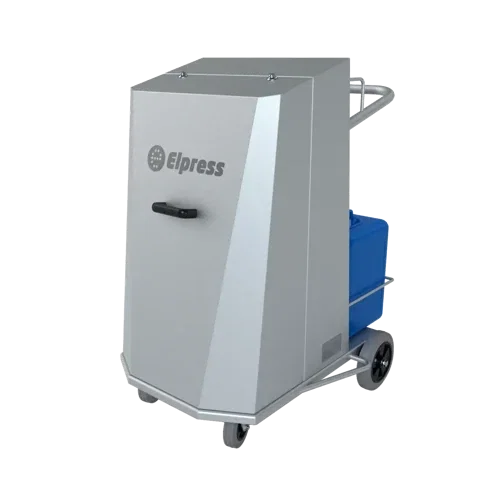
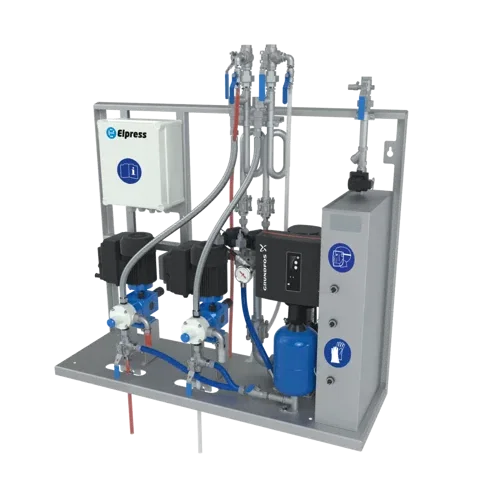
A booster unit, also known as a hydrophore pump, is a system that increases the pressure of the mains water for more efficient cleaning. A booster unit is used in industrial environments where higher pressure (between 20 and 100 bar) is needed for optimal cleaning. Booster units are often used in mobile cleaning systems.
Cleaning systems
Economical with water
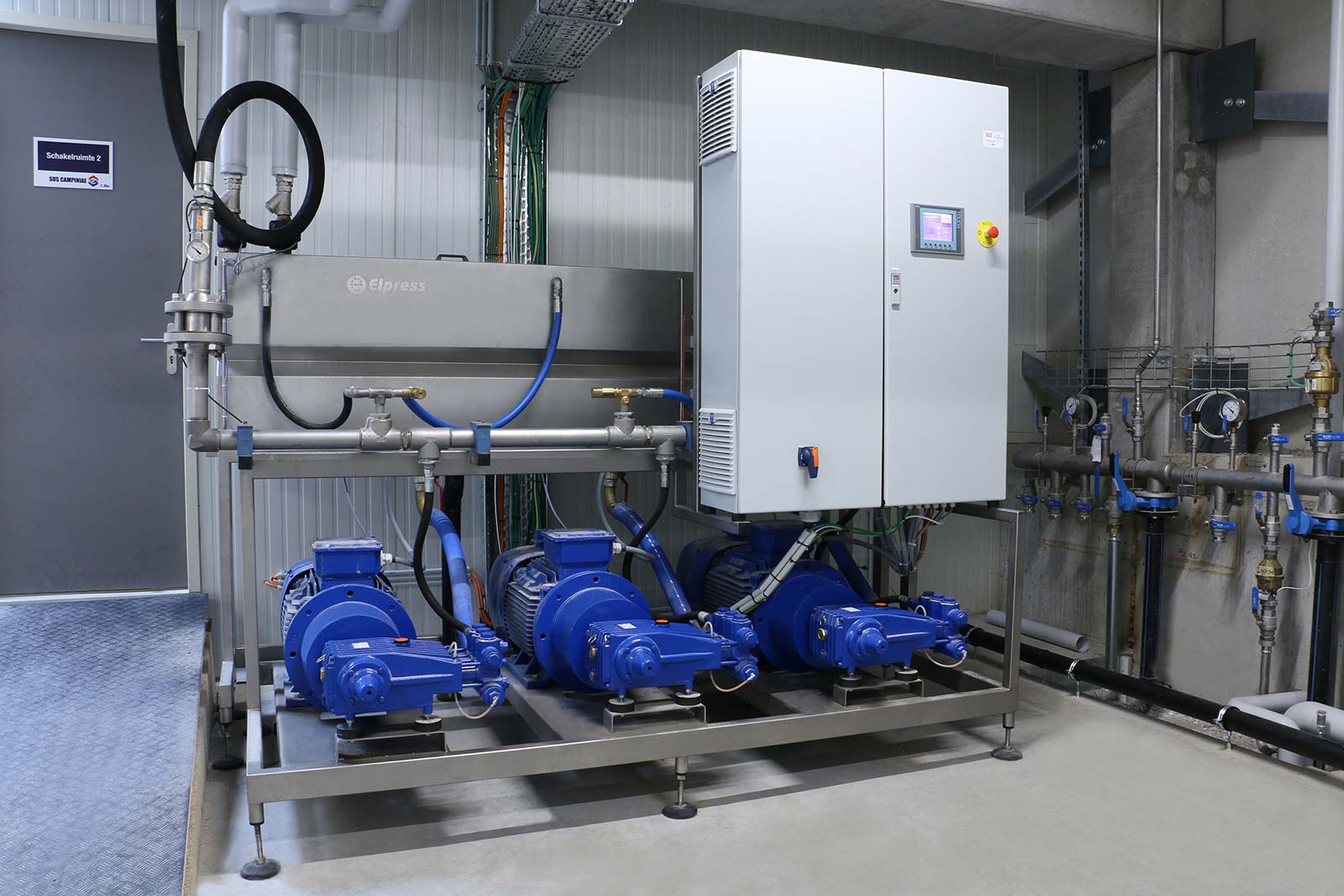
Once started up, a booster unit will raise your mains water to the correct working pressure, enabling users to start cleaning. When opening/closing one of the supply points, the unit automatically switches on or goes into standby. The booster unit easy to maintain, emits very little noise and has adjustable feet. The intelligent software makes sure the next pump is started up when needed.
A stainless steel break tank gives the installation certified backflow protection. There is also a dirt trap in the supply line, which ensures that the water supply is free of dirt and breakdowns are prevented. In a multi-pump unit, a flow meter makes sure the next pump starts up or shuts down when needed.
| Temperature | 78 °C |
| Working pressure | 20 bar |
| Power | 3 kW |
| Total power | 3 kW |
| Capacity per pump/minute | 65 liter |
| Temperature | 70 °C |
| Working pressure | 20 bar |
| Power | 4 kW |
| Total power | 4 kW |
| Capacity per pump/minute | 100 liter |
| Temperature | 70 °C |
| Working pressure | 20 bar |
| Power | 5.5 kW |
| Total power | 5.5 kW |
| Capacity per pump/minute | 130 liter |
| Temperature | 70 °C |
| Working pressure | 20 bar |
| Power | 8 kW |
| Total power | 8 kW |
| Capacity per pump/minute | 190 liter |
| Temperature | 70 °C |
| Working pressure | 80 bar |
| Power | 4 kW |
| Total power | 4 kW |
| Capacity per pump/minute | 21 liter |
| Temperature | 70 °C |
| Working pressure | 60 bar |
| Power | 4 kW |
| Total power | 4 kW |
| Capacity per pump/minute | 21 liter |
| Temperature | 70 °C |
| Working pressure | 20 bar |
| Power | 11 kW |
| Total power | 11 kW |
| Capacity per pump/minute | 240 liter |
| Temperature | 70 °C |
| Working pressure | 20 bar |
| Power | 7.5 kW |
| Total power | 15 kW |
| Capacity per pump/minute | 190 liter |
| Temperature | 70 °C |
| Working pressure | 20 bar |
| Power | 11 kW |
| Total power | 22 kW |
| Capacity per pump/minute | 240 liter |
| Temperature | 70 °C |
| Working pressure | 20 bar |
| Power | 11 kW |
| Total power | 22 kW |
| Capacity per pump/minute | 190 liter |
| Temperature | 70 °C |
| Working pressure | 20 bar |
| Power | 11 kW |
| Total power | 33 kW |
| Capacity per pump/minute | 240 liter |
| Temperature | 70 °C |
| Working pressure | 20 bar |
| Power | 11 kW |
| Total power | 33 kW |
| Capacity per pump/minute | 190 liter |
| Temperature | 70 °C |
| Working pressure | 40 bar |
| Power | 7.5 kW |
| Total power | 7.5 kW |
| Capacity per pump/minute | 67 liter |
| Temperature | 70 °C |
| Working pressure | 40 bar |
| Power | 7.5 kW |
| Total power | 7.5 kW |
| Capacity per pump/minute | 67 liter |
| Temperature | 70 °C |
| Working pressure | 40 bar |
| Power | 8 kW |
| Total power | 15 kW |
| Capacity per pump/minute | 67 liter |
| Temperature | 70 °C |
| Working pressure | 40 bar |
| Power | 7.5 kW |
| Total power | 15 kW |
| Capacity per pump/minute | 67 liter |
| Temperature | 70 °C |
| Working pressure | 40 bar |
| Power | 8 kW |
| Total power | 30 kW |
| Capacity per pump/minute | 67 liter |
| Temperature | 70 °C |
| Working pressure | 40 bar |
| Power | 7.5 kW |
| Total power | 30 kW |
| Capacity per pump/minute | 67 liter |
| Temperature | 70 °C |
| Working pressure | 40 bar |
| Power | 7.5 kW |
| Total power | 45 kW |
| Capacity per pump/minute | 133 liter |
| Temperature | 70 °C |
| Working pressure | 40 bar |
| Power | 7.5 kW |
| Total power | 45 kW |
| Capacity per pump/minute | 67 liter |
| Temperature | 70 °C |
| Working pressure | 40 bar |
| Power | 7.5 kW |
| Total power | 60 kW |
| Capacity per pump/minute | 67 liter |
| Temperature | 70 °C |
| Working pressure | 40 bar |
| Power | 7.5 kW |
| Total power | 60 kW |
| Capacity per pump/minute | 67 liter |
| Temperature | 70 °C |
| Working pressure | 80 bar |
| Power | 5.5 kW |
| Total power | 11 kW |
| Capacity per pump/minute | 32 liter |
| Temperature | 70 °C |
| Working pressure | 100 bar |
| Power | 11 kW |
| Total power | 11 kW |
| Capacity per pump/minute | 47 liter |
| Temperature | 70 °C |
| Working pressure | 80 bar |
| Power | 11 kW |
| Total power | 22 kW |
| Capacity per pump/minute | 50 liter |
A booster unit is a system designed to raise the water pressure for cleaning purposes in industrial environments. The most important purpose of a hydrophore pump is to ensure that there is sufficient water pressure available for effective cleaning, regardless of the size of the cleaning project. A booster unit lets you ensure that you and your colleagues always have sufficient water pressure to clean successfully.
When purchasing an industrial cleaning system, it is crucial to determine how many employees will use it at the same time. This analysis forms the basis for determining the necessary capacity of the booster unit. Do you want to know more about the necessary capacity of your booster unit?
Good hygiene is very important, especially in the food industry. That’s why a booster unit is absolutely ideal for use in the food processing industry. Booster units are used in this industry to increase the water pressure for cleaning machines, conveyor belts and production areas. This ensures that food products can be processed safely and cleanly. When it comes to producing and processing food, you obviously don’t want the water pressure to be a problem for any length of time. Fortunately, a booster unit ensures that the water pressure is always satisfactory. So you can rest assured that you’ll always being able to perform your cleaning tasks.
Where you place your booster unit depends on your specific situation. However, we do recommend that you place the unit in a strategic location. In this way, you’ll ensure that the system works effectively and that the water is always at the right pressure.
Some tips for placing your unit in a strategic location:
Booster unit with stainless steel break tank
In many situations, a stainless steel break tank is installed in combination with the booster unit. We recommend you do this to prevent water containing additives used in the cleaning process from flowing back into the mains supply. This tank is usually placed in the vicinity of the booster unit. A stainless steel break tank offers the following advantages:
Want to know more about the advantages of a stainless steel break tank? Find out more in our blog:


In brief, a booster unit is a more versatile and complex system that is used for supplying water generally, while a high-pressure pump is specifically designed to supply water at very high pressure for specific tasks.
A booster unit is:
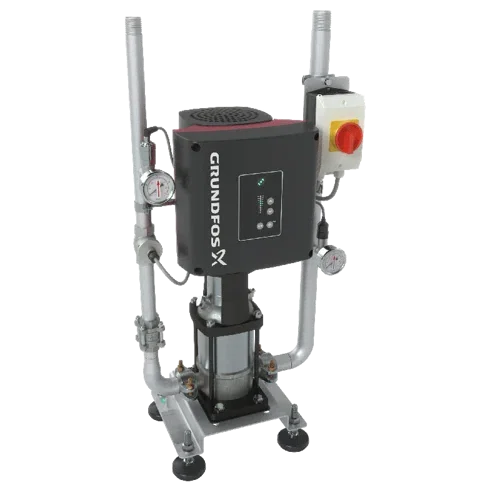
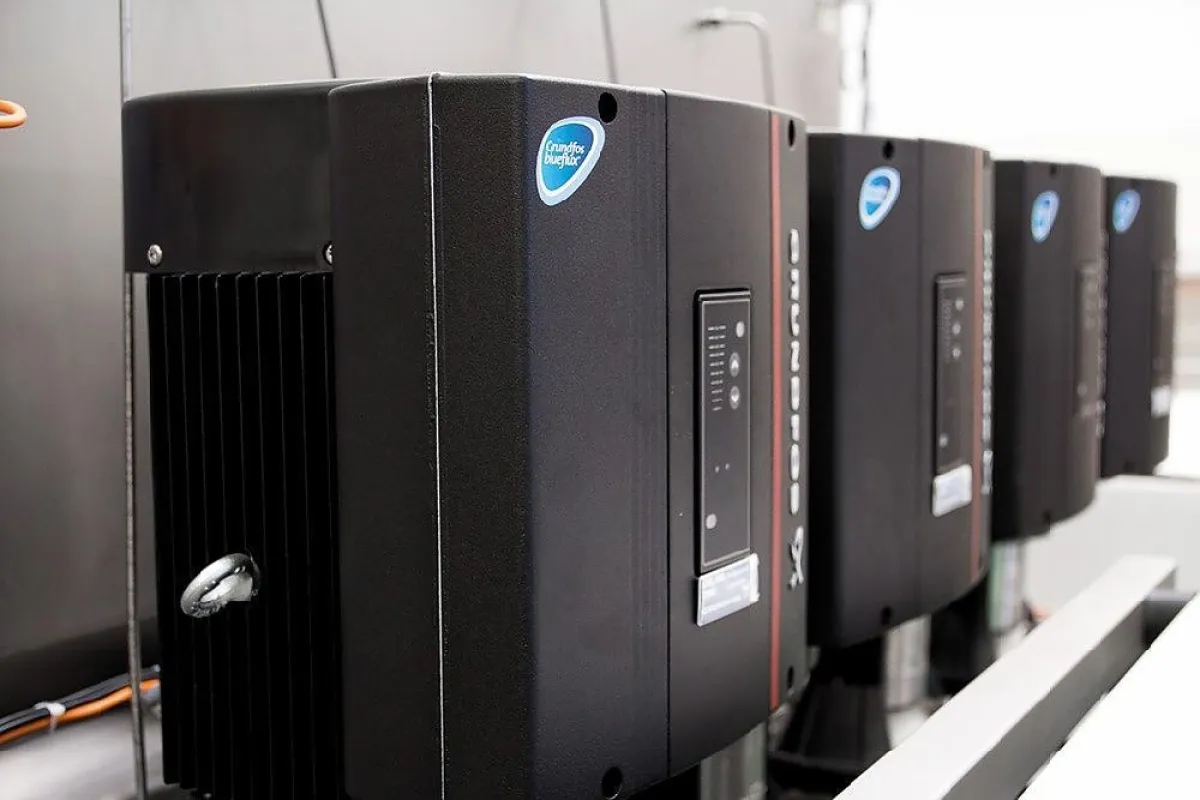
De Grundfos pomp uit de CRIE serie is een frequentiegestuurde centrifugaalpomp die wordt gebruikt bij een drukverhoginginstallatie met een werkdruk van 20 bar. Efficiëntie is het sleutelwoord bij deze pomp. De pomp verbruikt alleen de energie die daadwerkelijk nodig is.
De geïntegreerde frequentieregelaar zorgt ervoor dat het toerental kan variëren en de meest optimale pompprestaties kunnen worden geleverd. De Grundfos pompen zijn onderhoudsvriendelijk, corrosiebestendig, ruimtebesparend en bestand tegen licht agressieve vloeistoffen. Om 40 bar te genereren kunnen er twee pompen in serie worden geschakeld.
Grote voordelen van een Grundfos pomp:
Efficiëntie: De pomp verbruikt alleen de energie die daadwerkelijk nodig is, wat resulteert in kostenbesparingen en een lagere ecologische voetafdruk.
Altijd optimale prestaties: De ingebouwde frequentieregelaar maakt variabele snelheden mogelijk, waardoor de pomp altijd optimale prestaties levert en energie bespaart.
Onderhoudsvriendelijk: Grundfos pompen zijn gemakkelijk te onderhouden, wat de levensduur verlengt en de operationele kosten verlaagt.
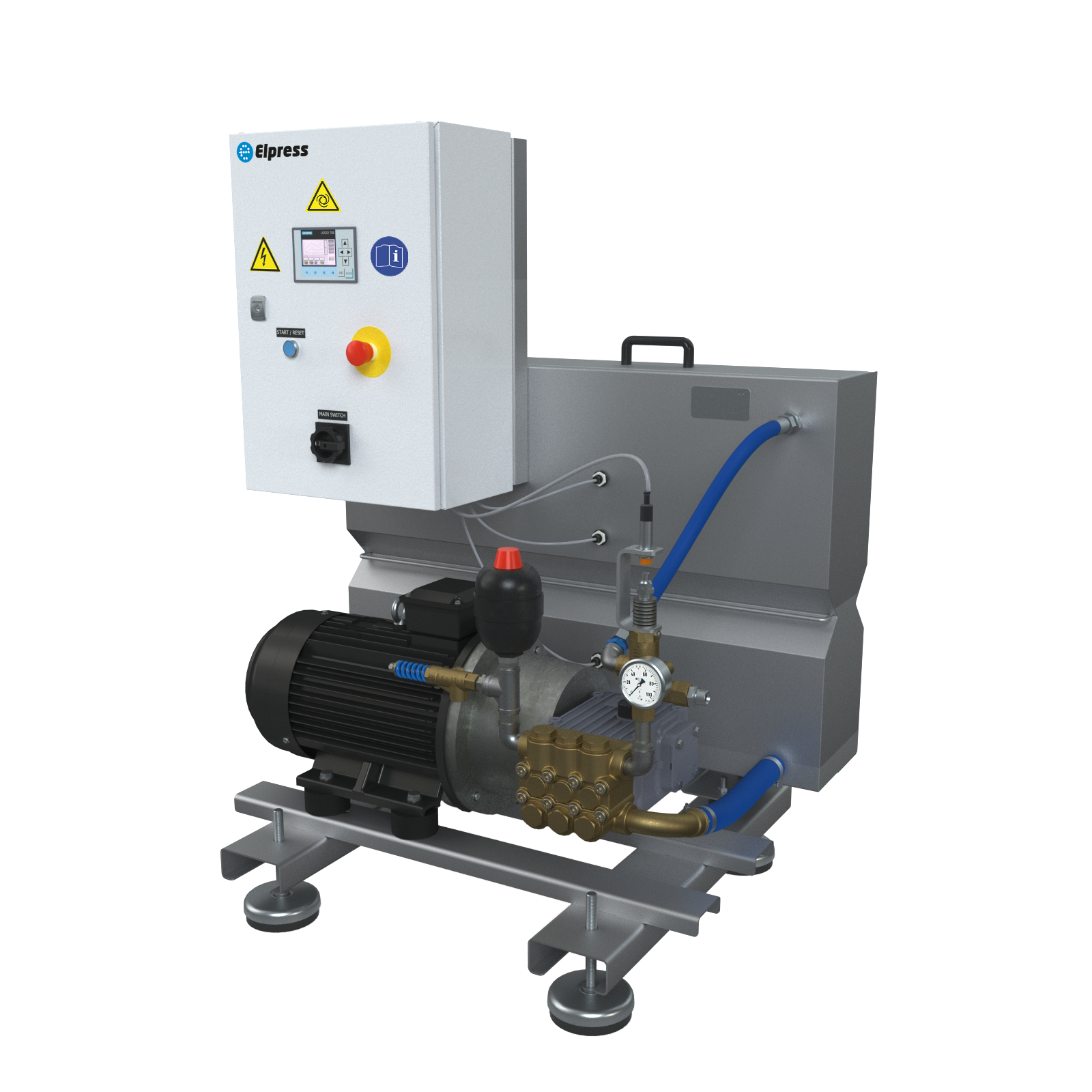
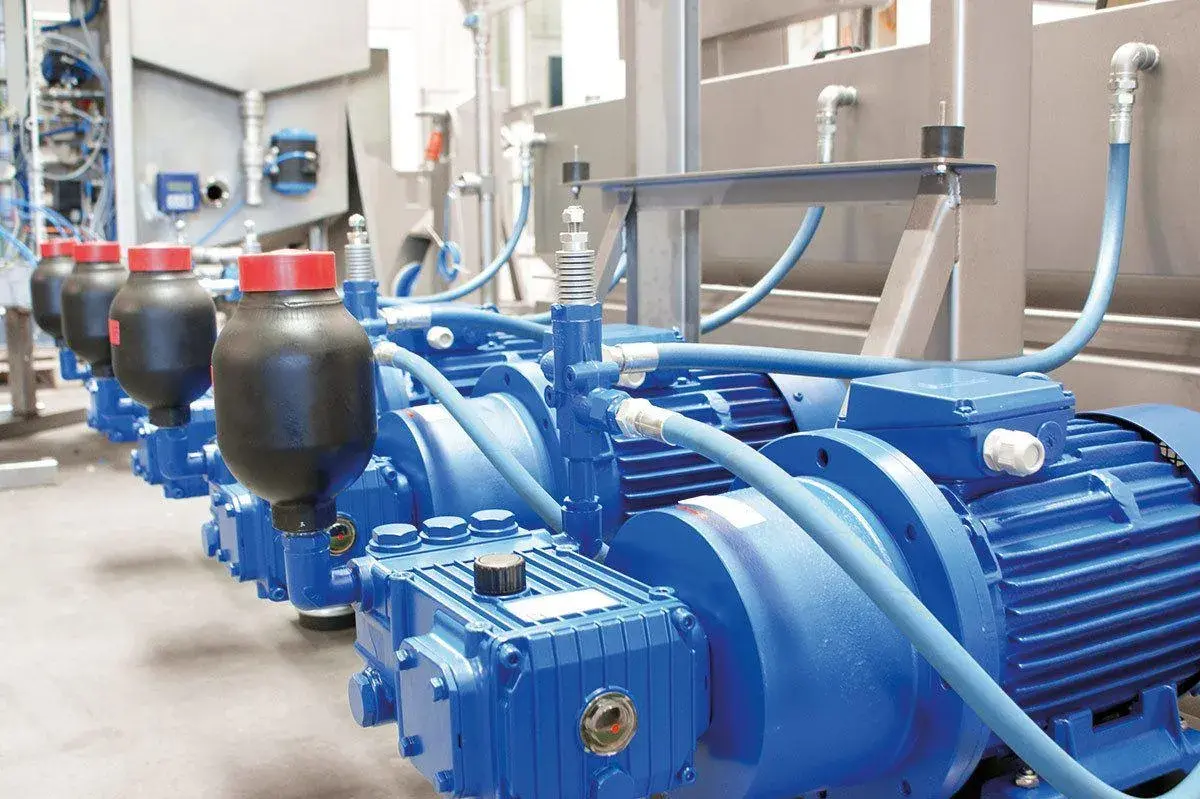
The high-pressure systems from Elpress generate a working pressure of at least 60 bar. High-quality Speck plunger pumps are integrated into these systems. These pumps are developed according to the highest standards and with the latest engineering technology. Speck pumps have solid ceramic plungers with a double seal and leakage return.
Unique advantages of a Speck pump:
Leak-tightness: Speck pumps have ceramic plungers and double seals with leakage return for improved sealing.
High quality and reliability: Speck pumps are developed according to the highest standards, guaranteeing reliable performance.
Cleaning Systems
Cleaning Systems
Cleaning Systems
Need advice or do you have a question?
Wout Spanjers Sales Manager Netherlands
"*" indicates required fields
Wout Spanjers Sales Manager Netherlands
"*" indicates required fields
Need advice or do you have a question?
Wout Spanjers Sales Manager Netherlands
Our expert, Wout, is on hand to provide you with personalised advice to help you make the right choices when it comes to hygiene.