.webp)
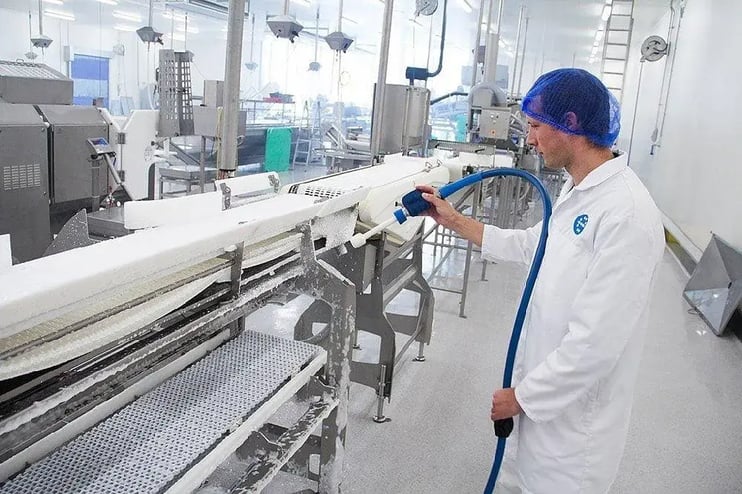
In many production companies, large amounts of water, chemicals and energy are unwittingly wasted during cleaning. This does not happen because processes are poorly designed, but because there is insufficient insight into what is actually happening outside production time. Without monitoring, deviations remain invisible and adjustments become difficult.
In this article you can read where waste occurs in the cleaning process, why it often goes unnoticed and how you can get a better technical grip on consumption.
Why waste often goes unnoticed
Cleaning often takes place outside production time. As a result:
- there is little direct supervision;
- Different teams work at different times;
- deviant behavior is not immediately visible;
- and there is often no clear feedback on consumption.
Moreover, external cleaning teams are regularly judged on speed. Water, chemicals and energy are your company's costs, not theirs. That makes waste not conscious, but structural.
The true cost of waste
Wastage is not just in higher water bills. In practice, it's a combination of:
- Water consumption
Continuous flushing or cleaning with an open lance can cost thousands of extra gallons per cleaning.
- Chemical consumption
Excessive dosing, the wrong agents or unnecessarily long foaming times cause structurally higher consumption.
- Energy consumption
Hot water, pumps and booster systems run longer than necessary, directly impacting energy costs.
- Wear and maintenance
Unnecessary use accelerates wear on hoses, fittings and installations, leading to additional maintenance and replacement.
What causes of waste are most common in practice?
When insight is lacking, the same patterns occur again and again:
- Cleaning without a nozzle
A common problem: The nozzle is removed from the lance so that spraying can be done faster. Water consumption skyrockets, while cleaning quality sometimes actually decreases. - Stand times that are too long
Rinsing or foaming that goes on much longer than necessary, simply because no one sees that it is happening. - Wrong chemicals at the wrong times
Using chemicals where only rinsing is needed or vice versa. - No limits on consumption
Without limits, there is nothing to intervene when consumption is out of line.
The problem is not the behavior itself, but the lack of limits and signals that correct.
From signaling to intervention: technical control of consumption
With a smart cleaning system, you can go beyond just recording. You can actively manage behavior and consumption.
What you can do technically:
- Set limits for water and chemical consumption.
Is a limit exceeded? Then the system can temporarily shut down. - Activate blockades in case of incorrect use.
For example, when chemistry is used without correct connection. - Apply time limits to certain functions.
This prevents unnecessarily long rinsing or foaming times.
- Grant rights per user or team.
Not everyone needs to have access to everything.
For the technical department, this means: less dependence on manual checks and faster insight into where things are going wrong.
How data enables structural savings
When cleaning becomes measurable, overview is created. With digital monitoring (e.g. via eCloud) you can see:
- which areas structurally use more water;
- Which teams deviate in chemical consumption;
- Where sudden peaks or deviations occur.
This data makes it possible to make targeted adjustments: adjust settings, discuss working methods, plan maintenance and better substantiate investments.
Elpress helps you to map waste
Waste in the cleaning system often remains hidden. Through lack of insight or human error, companies use more water, chemicals and energy than necessary. Do you want to know how to optimize your own cleaning process? Then download our white paper "An optimal cleaning process for every company".