.webp)
No matter which part of the food industry you work in, industrial hygiene is one of the most important, but also one of the most complex parts of the process. As a quality control employee, you cannot do this alone. All employees play a major role in this. They enter the production hall day in, day out, and are responsible for cleaning the space and for their personal hygiene. In this blog, we explain why industrial hygiene is so important and provide practical tips for good hygiene in the workplace. With the right procedures and equipment, you can quickly eliminate a major concern.
As a quality control officer or hygiene manager, you want the production process to be hygienic. No bacteria or viruses, no cross-contamination, no diseases, no pests, and no production downtime. To guarantee quality and comply with all laws and regulations, it is necessary to organize industrial hygiene properly. In this blog, you will find five practical tips for obtaining the right certifications.
Tip 1: Don’t allow personal hygiene to be an option
Personal hygiene as a risk factor
In every production area, employees are the biggest source of bacteria and viruses. They work with their hands and touch food, eat a sandwich during their break or go to the toilet, and come into contact with other people when they get home. That is why personal hygiene is so important. It involves more than just washing your hands. Below, we highlight the most important points to consider.
Hand hygiene
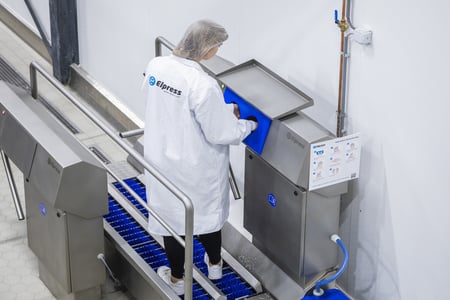
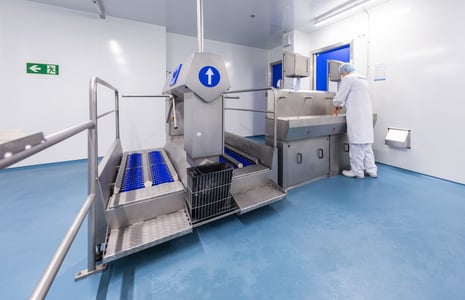
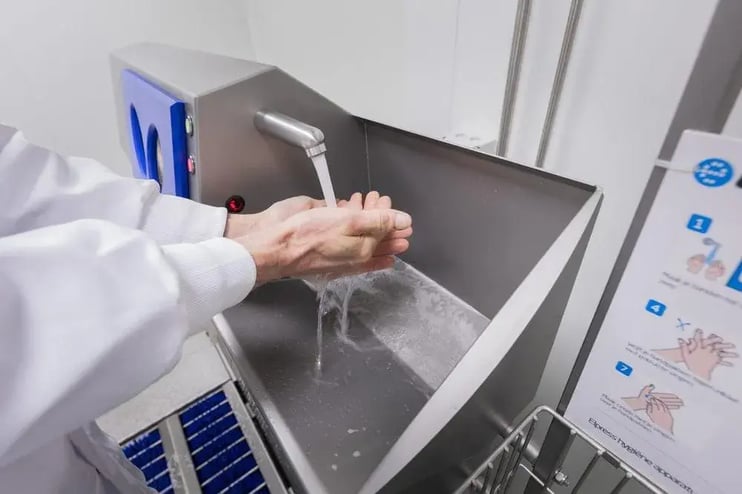
Ensure that employees soap, wash, dry, and disinfect their hands every time they enter the workplace. This also applies when they wear gloves during work. If you want to ensure that this is done consistently and correctly, you can opt for a hygienic entrance. Employees can only enter the production area via a turnstile once all the necessary steps have been taken. You can read more about this topic in our blog about The importance of good hand hygiene in the food industry.
Clothing regulations
Clearly inform employees which of their own clothes they should wear and which clothes they will receive from the company. Some materials are easier to keep clean and wash than others. If aprons are worn, make sure they are thoroughly cleaned before each break. An apron wash station is a practical solution for this.
Hair tied back or covered
Hair falls out regularly. It is therefore wise to agree that employees should not wear their hair loose and should use a hairnet. This prevents hair from getting into or on food.
Clean shoes
Never allow employees to enter the production area wearing their own shoes. Make sure they always change their shoes at the company. Bacteria and viruses can also nestle in shoes. If you want to go one step further, provide good (electric) shoe brushes that scrub the soles thoroughly before the wearer enters.
Conduct
Employees often want to get in and out as quickly as possible. They are less concerned with the business process. That is why it is essential to require them to follow the rules. This also applies to temporary workers and new colleagues. A mention in the manual and instructions on the door are not enough. With the right equipment, such as a hygienic entrance, personal hygiene is not an optional extra, but a must. Employees can only enter the production area via a turnstile once they have followed all hygiene procedures.
Tip 2: Also think about crates, carts, pallet trucks and knives
Hygiene of transport and auxiliary equipment
In addition to good personal hygiene, it is important that the materials used in the production hall are also clean. There are several carriers that can easily transfer bacteria and viruses to food. Think of pallet trucks, crates in which food and semi-finished products are transported, and carts used to move them. All these materials must be thoroughly cleaned and disinfected before they enter the clean work area. Take, for example, crates in which meat is placed. These must first be thoroughly rinsed and disinfected before new meat is placed in them. If there is a bacterium or virus on the crate, the new meat can become contaminated, resulting in illness. Such a crate can also cause contamination in the production hall, which can lead to production stoppages because everything has to be cleaned again. By using a crate washer, you ensure that crates remain structurally clean. In addition, there are special sterilization machines for knives, for example, which employees can use to quickly and easily disinfect all knives during each break.
Tip 3: Clean smart in accordance with the HACCP guideline
Cleaning as an integral part of HACCP
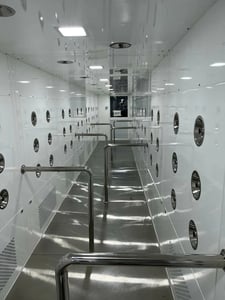
Every company has different cleaning rules. When processing meat, for example, different aspects are taken into account than when processing vegetables. What always applies is that cleaning work must be carried out in accordance with HACCP guidelines. Not only because this is mandatory for all food companies in Europe, but also because it ensures that industrial hygiene is up to standard. To simplify this cleaning process, you can use a foam and disinfection system. By placing this centrally, floors, walls, production lines, crates, and carts can be easily rinsed, foamed, dried, and disinfected. Elpress develops solutions for personal hygiene and for disinfecting means of transport such as crates, making cleaning in accordance with HACCP guidelines practical and straightforward.
HACCP-certified equipment
HACCP not only describes cleaning tasks, but also sets requirements for materials and products. All Elpress hygiene equipment has been developed in accordance with HACCP guidelines. This means that dirt residues do not easily adhere to or become trapped in the equipment and that the machines can be cleaned thoroughly without the use of tools. In addition, they are equipped with sloping surfaces on which no loose objects can remain. Elpress supplies this hygiene equipment with an official HACCP certificate.
Tip 4: Effortlessly combat and avoid pests
Pests as a risk to food safety
Pests pose a major risk to any food business. They can cause illness among employees, contaminate products, and damage cables or materials. In such cases, production must be halted, everything must be cleared away, and a thorough cleaning must be carried out. This is disastrous for the business, especially when it also generates negative publicity. Pests thrive in dirty environments and often hide under or behind machines, appliances, or cabinets, or in places that are not cleaned thoroughly. If you notice signs of pests, it is wise to call in professional pest control immediately, as they know the right methods to use. The sooner this is done, the better, as pests reproduce quickly. It is even better to prevent pests. With the right foam and disinfection installations, rinsing installations, and hygiene units, you can easily clean floors, walls, production lines, and hygiene points for employees on a daily basis, significantly reducing the chance of uninvited guests.
Tip 5: Work with a partner that has everything under one roof
Equipment, maintenance, and service
Reliable equipment is essential for thoroughly cleaning the production hall and ensuring personal hygiene. That is why it is important to work with an experienced partner. Purchasing equipment is the first step, but maintenance and service are just as important. If employees are unable to clean because a pump or foam installation is not working, the process comes to a standstill. Elpress has its own maintenance and service department. Thanks to our own technicians, the right knowledge, and parts in stock, we are not dependent on other parties. This is faster and often more cost-effective. With this complete total package, you can ensure industrial hygiene with considerably less worry.
Ensure that hygiene in your workplace is structurally in order.
These five tips will help you improve and simplify hygiene management in the workplace. Please note that the process only works when all components are in place. If employees wash their hands thoroughly, but crates enter the production hall without being cleaned, the whole process loses its effect. It's about the entire business process: the chain is only as strong as its weakest link. Elpress is happy to help you set up this process properly and practically.
Would you like to see all the regulations, rules, and solutions clearly laid out? Then take a look at the white paper "Personal hygiene in the food industry".