.webp)
Legislation largely determines how companies operate. Clear rules are prescribed by national and European authorities, particularly within the food industry. This is logical, given the great importance for both consumers and the economy. Companies translate these obligations into their vision and policy. Implementing this requires smart solutions that also work in practice. Elpress develops applications that offer companies concrete tools to comply with HACCP regulations, including in the area of personal hygiene.
Personal hygiene within HACCP
Equipment, conveyor belts, storage systems, and cooling installations must, of course, be and remain hygienically clean. But wherever food is prepared or produced, people are at work. Personal hygiene therefore plays a crucial role in maintaining high hygiene standards within a company. Monitoring personal hygiene goes beyond simply washing hands after a break or toilet visit. It requires structural measures that oblige employees to always enter the workplace properly cleaned. Elpress has over 50 years of experience in creating hygienic working environments. In the five applications below, you will find practical solutions for ensuring personal hygiene within the HACCP plan.
1. Hygienic entrances
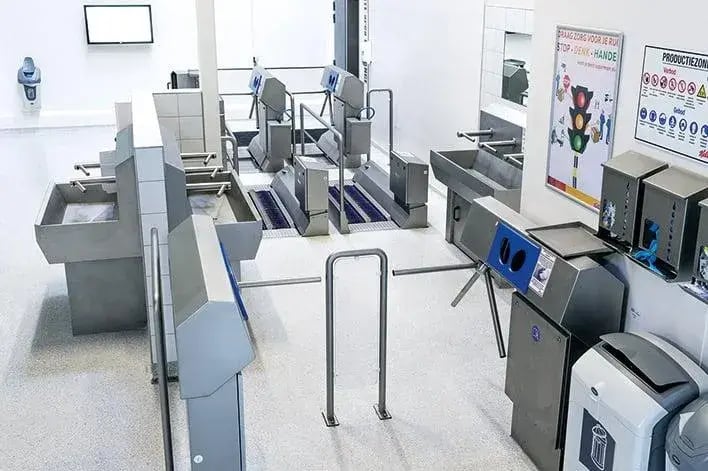
A hygienic entrance is a structure that employees must pass through before entering the workplace. The entrance includes several steps for cleaning and disinfecting hands, footwear, and, if necessary, clothing. Hygienic entrances can be designed as either voluntary or mandatory. In a mandatory setup, the passage is blocked by gates. Only after a mandatory action, such as hand disinfection, has been performed correctly will the gate open.
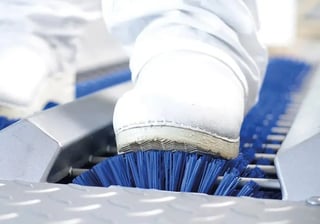
2. Sole cleaning
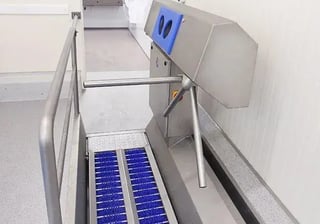
Footwear can carry both visible and invisible dirt, posing a risk to food safety. Proper cleaning is therefore essential. Various configurations are possible for cleaning soles and edges, soles and shafts, or soles only. The use of disinfectants also removes invisible microorganisms. Sole cleaning can be installed as a separate facility or integrated as part of a hygienic entrance.
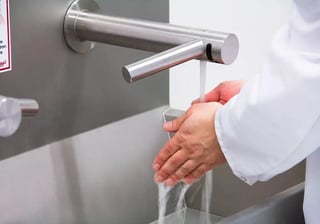
3. Hand cleaning
Hands come into direct contact with food and are therefore an important focus within HACCP. After a lunch break, toilet visit, or smoke break, hands must be washed, dried, and disinfected. Hand cleaning is therefore a crucial step, both as part of a hygienic entrance and in the form of a stand-alone unit.
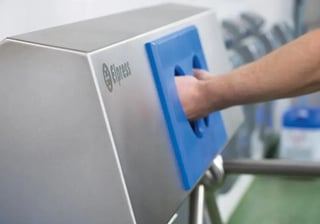
4. Chemical dispensers
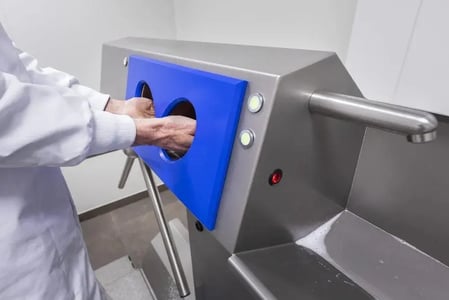
Chemical dispensers ensure thorough cleaning and disinfection of the hands. Without performing this action correctly, it is not possible to enter the workplace. A turnstile blocks the passage and only opens after the action has been performed. A sensor registers the action and sends a signal to the turnstile to grant access.
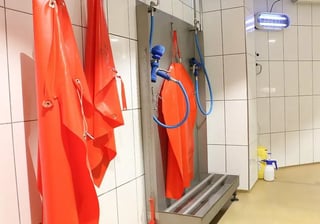
5. Apron washing area
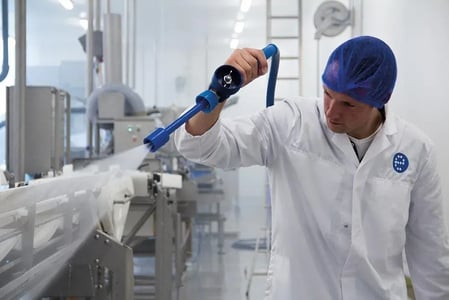
The apron washing station is used for manual cleaning of aprons. Aprons hung on hooks can be easily cleaned with a brush with water supply and a spray gun. The used water is drained directly via a built-in gutter. This gutter has a bottom grate that is also suitable for manual cleaning of boots.
Want to know more about personal hygiene?
Would you like to know more about the above applications? We have compiled these solutions for you in a handy white paper on personal hygiene. You can download this white paper free of charge from our website.